

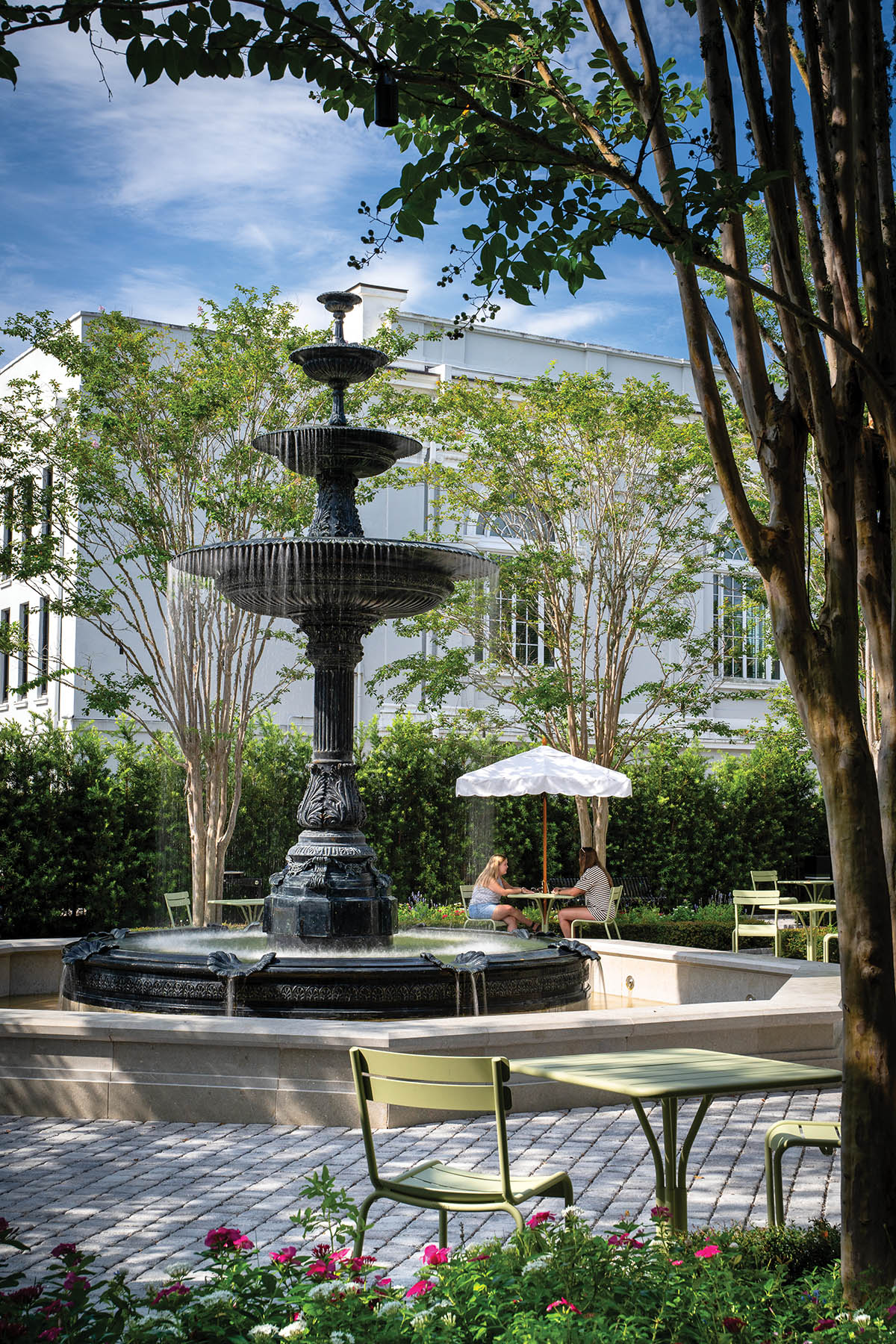
Confession: our family used to pull into the “old SCE&G lot” on Meeting Street on Sunday mornings, coveting that rare find—free parking, at least during church hours. Today, we still “park” in that former lot, both before and after church, or en route to events at the Charleston Library Society or the Gibbes Museum of Art, or during a stroll down King, only we’re no longer ditching the minivan there. We’re pausing on a park bench, idling by the new fountains, and listening to laughter as kids run around. American Gardens is a blossoming new gem in the city’s urban center, an oasis of thoughtfully designed green space where a vacant building and former parking lot once stood. It’s but one of several examples of private dollars being invested for public good to enhance Charleston’s landscape.
South Carolina financier and philanthropist Darla Moore initially tilled the ground for this type of partnership. After the Lake City native and her late husband, Richard Rainwater, bought a home here in the early 2000s, Rainwater grumbled about how ho-hum many of the city’s public parks were compared to the outstanding architecture. When he suggested she might “do something about that, maybe add some window boxes or something,” she thought bigger—much bigger. In 2007, Moore founded the Charleston Parks Conservancy, seeding it with a $10-million donation. The not-for-profit’s mission was simply to connect people to their parks. “It’s got to be a public-private partnership, it’s got to be integrated with the city, and the community has to be involved; the people have to have a stake,” Moore said in a 2017 profile for this magazine.
Nearly 20 years after the organization’s inception, more people have indeed had a stake in being advocates and stewards for Charleston’s urban and suburban outdoor spaces. The Parks Conservancy, today led by Jason Kronsberg, has spearheaded efforts to reinvigorate Colonial Lake and Hampton Park, as well as numerous other city parks. The work is 90 percent funded by private and corporate contributions, including spin-off from Moore’s endowment, with the city kicking in the rest, and the hands-on weeding, planting, and watering powered by the conservancy’s robust volunteer corps.
“The conservancy works in 26 parks in the city, trying to engage the public in ways that a traditional municipal department wouldn’t or couldn’t do, or getting things done more quickly than in a traditional city budget process,” says Kronsberg, who knows the limits of municipal governance, having spent 16 years working for the City of Charleston before joining the conservancy. “We’re unique in that we have so many locations we manage, including three community gardens and two food forests, which means we deliver a lot of community benefit. But partnerships encouraging citizens to create pride and ownership of their parks are key.”
For the five parks featured here, that public-private collaboration has been pivotal and beneficial to us all.
The Beauty Imperative: Theodora Park
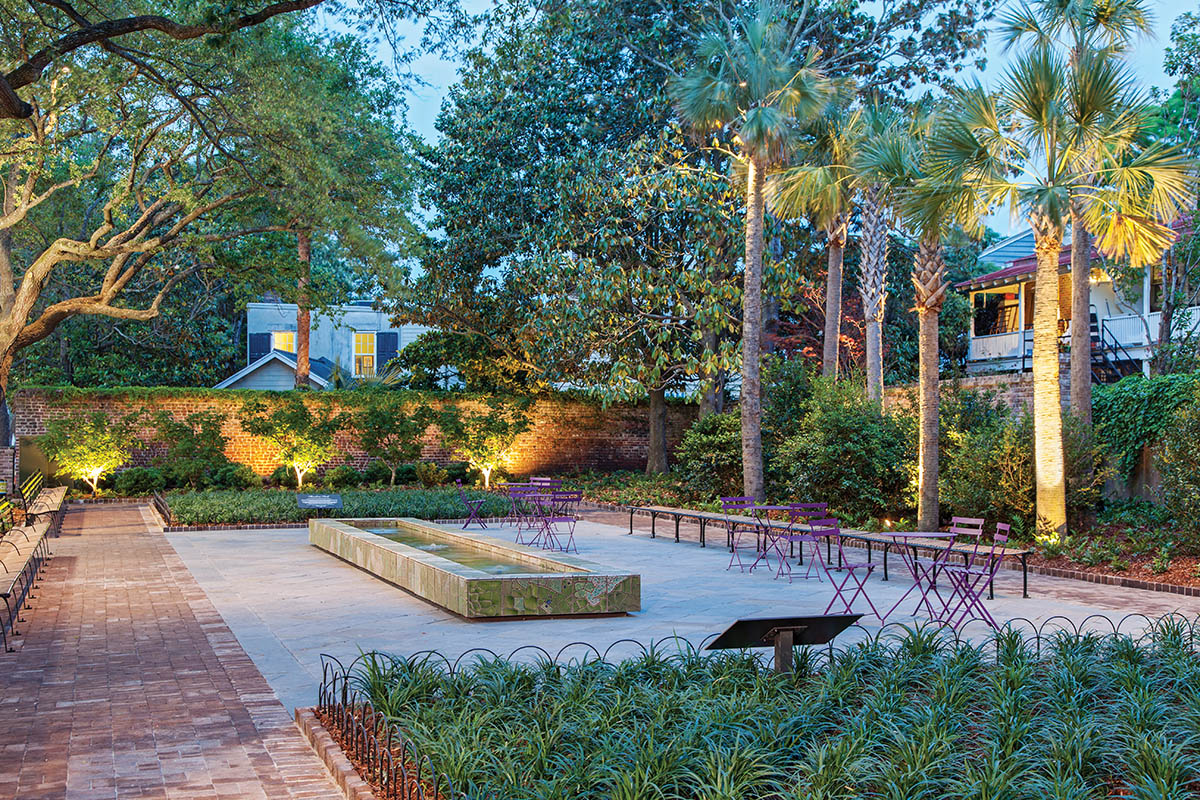
“If you love nature, you will find beauty everywhere,” reads a quote that retired public relations executive David Rawle spotted in a café in Norway. “How true that is!” he affirms. “And it’s why it’s essential for urban environments to include green spaces that are truly beautiful, well-maintained, welcoming, and safe. With Theodora Park, we sought to raise the bar on each of those attributes.”
Opened in 2015, the pocket park on the corner of George and Anson streets, across from the Gaillard Center, is named in honor of Rawle’s mother, who loved nature and art. The small rectangular space had been a neglected, fenced-in “tot lot,” though children rarely played there. “It was dense with magnolias, with no place to sit. And at night, dark and dangerous,” says Rawle, who saw potential for the prominent corner and proposed to then-mayor Joe Riley that he and his wife, Carol, would donate $100,000 if the city and the Charleston Parks Conservancy would help bring a new park to life.
That dollar amount proved to be just the start, notes Rawle, who eventually created an endowment for the park’s ongoing care and maintenance, but the private investment for public good has been well worth it. The landscape design by Sheila Wertimer includes palmettos, sasanquas, camellias, azaleas, red maples, jasmine, saucer magnolias, and holly ferns, around a 32-foot-long fountain pool featuring handmade tiles by Maine-based ceramicist Paul Heroux. Other artful aspects include a Philip Simmons wrought-iron gate, purple café tables and chairs, and custom benches replicating those in Manhattan’s Battery Park. Every aspect of the design has been intentional, and while the Parks Conservancy oversees maintenance, the Rawles are daily stewards, picking up trash, adjusting this and that. “It’s a heck of a lot of work, but boy, does it make a difference in people’s enjoyment. A little bit of nature goes a long way,” Rawle says.
In the days following the Mother Emanuel tragedy, people would “stop there, in the middle of a hot June day, and just listen to the quiet ripple of the fountain. They found some peace, some nourishment, some grounding there,” says Rawle. “If that’s all that ever happened with Theodora Park, it would have been worth it.”
But that’s far from all that’s happened there. The park has showcased the work of famed sweetgrass basket artist Mary Jackson and hosted a memorial photography exhibit celebrating Spoleto Festival USA’s Geoff Nuttall in 2022. During the pandemic, Rawle conceived of a holiday light display projecting uplifting words and messages across the park’s surfaces, with words like “Hope” and “Imagine” sparkling against palmetto trunks. Words that conveyed the essence of Theodora Park, “a beautiful natural setting for introspection and free, creative expression,” says Rawle. “With so much divisiveness and uncertainty in today’s world, where does one find relief—a sense of balance and perspective, a sense of interdependent harmony? In nature.”
Theodora Park
86 Anson St.
Hours: Daily, 6 a.m.-11 p.m.
www.theodorapark.com
A Place for All: American Gardens
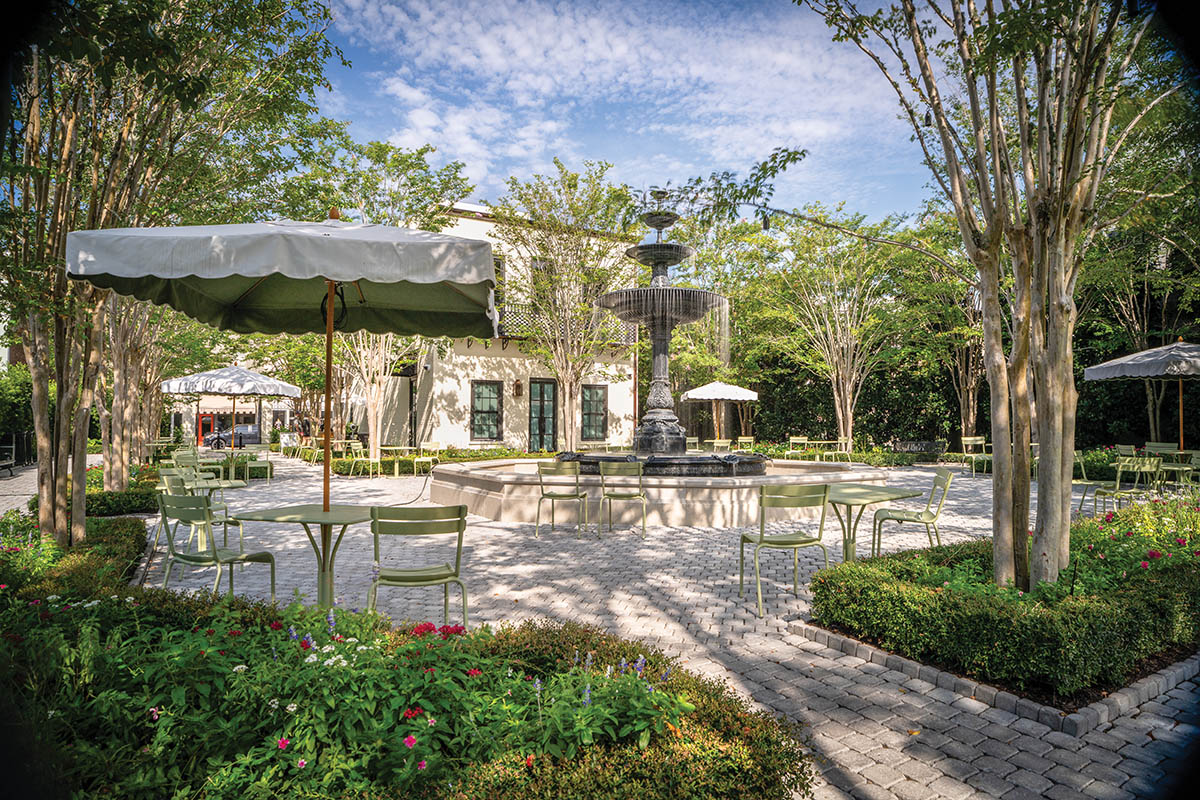
Sometimes a provocative question is enough to spark action. In 2022, a Post and Courier editorial asked, “Is Charleston losing its last chance for a central park downtown?” At the heart of the proposition was a one-acre parcel beside the Gibbes Museum of Art, and for businessman and developer Ben Navarro and his wife, Kelly, it presented an intriguing possibility. Ben’s father, Frank, a beloved college football coach, had recently died, and the family saw in the property an opportunity to honor him and his belief in the American dream as a “testament to freedom, unity, and possibility.” The park “will bring together the citizens of Charleston and become a place to celebrate all that we have in common,” Ben announced at American Gardens’ November 2025 opening.
Today, where crumbling gray pavement once stretched between King and Meeting streets, an alley of 68 crepe myrtles and two towering iron fountains surrounded by 100 magnolias links the two main thoroughfares. Bistro tables and chairs offer spots for sipping coffee (available at the park’s Coffee Cart), and a large lawn welcomes rambunctious kids or picnicking sweethearts. Over the holidays last year, a carousel and live music drew a nonstop stream of families. From running groups to silent reading sessions beneath the oaks to weekly flower and farmer’s markets and weekend live music, the park’s programming “encourages connection and enjoyment and looks to support small businesses and people we can uplift,” says American Gardens manager Eric Mann.
Unlike other parks mentioned in this story, American Gardens is privately owned and maintained. But it’s a most welcome addition to the city’s parks portfolio, says Charleston Parks Conservancy executive director Jason Kronsberg. “American Gardens is an incredible gift to the City of Charleston. The Navarro family and the Beemok team have given something almost immeasurable in value. To create a privately constructed, publicly open park space is overwhelmingly benevolent of them,” he says. “Our goal at the Parks Conservancy is to cultivate exceptional public gardens, so to measure against excellence, which is what the Navarro family has done, gives us something to strive for, both in terms of aesthetics and community engagement.”
American Gardens
174 King St.
Hours: Daily, 7 a.m.-9 p.m.
www.americangardenschs.com
A Gardener’s Legacy: Wragg Square
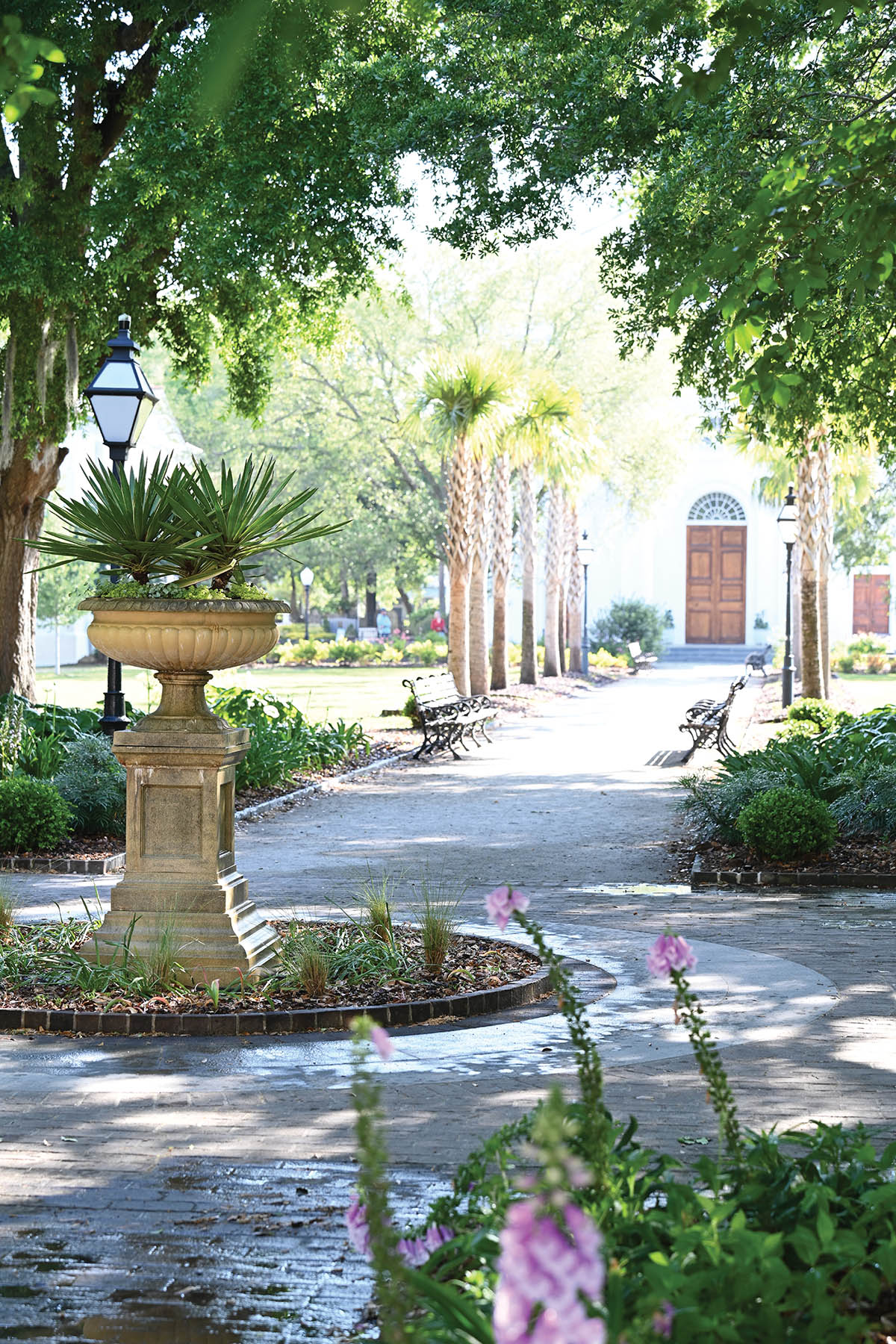
It started with the trees. Big live oaks and a tangle of overgrown water oaks all but concealed Wragg Square—a city park donated by the estate of John Wragg in 1801—that stretches in front of Second Presbyterian Church, with its defining historic brick wall and wrought-iron fence fronting Meeting Street. Sitting catty-corner to Marion Square, the heavily limbed park was easily overlooked, but when garden designer Beverly Rivers and sisters Madeleine McGee and Evie McGee Colbert began searching for a tree-centric location for a garden in honor of Evelyn “Patti” McGee, the tree-canopied plot held promise.
“Mom’s beloved garden on Anson Street was a shade garden, beneath a huge live oak,” says Patti’s eldest daughter, Madeleine, chair of the Charleston Horticultural Society as her mother had been (a consummate gardener, Patti also led the Lowcountry Garden Club and was a founding board member of the national Garden Conservancy). “A live oak makes a tough place for planting, but Mom did it. She had nine months to prepare that Loutrell Briggs garden for Evie’s wedding, and she, Beverly, and Sheila [Wertimer] dug in. Mom respected the lines of Briggs’s design but went her own way with the plant material.”
When Patti died in 2022 after a long illness, the honorary garden idea was already sprouting. What Rivers didn’t know when she first suggested Wragg Square was that “Second Pres had been my father’s family church for generations. It was perfect,” Madeleine says. They met with Kronsberg (then with the city) and the Parks Conservancy and designed plans to build upon the partial Wragg Square restoration done in 2016, in partnership with the neighborhood association, for the Peter and Patti McGee Memorial Garden. “We initially envisioned a small install of some of Mom’s favorite plants, but it quickly turned into a whole re-do,” says Madeleine.
The team began by pruning the overgrown trees, then added new lighting, irrigation, a path, and benches, Madeleine’s favorite part—“Charleston benches but with three seats, arranged for a group gathering,” she says. The McGee and Colbert families joined volunteers over a few weeks first to remove existing flora, and then plant new ones—hellebores, autumn fern, camellias, and purple coneflower, along with other perennials, all labeled with their Latin botanical names, “as Mom would have wanted,” says Madeleine. The garden reopened in April 2024, three weeks before Peter McGee died. “We’re so glad he got to see it,” she adds.
Building on the Wragg family’s gift more than a century and a half ago, the McGees/Colberts are the latest in a line of park stewards who see the city’s beautification as their enduring mark. “It’s so rewarding to work in concert with these families and help them realize their goals for their families’ legacy,” says Kronsberg. “Mom opened her home, her garden, and her heart to everyone,” Evie remarked at the park’s opening. “We hope the revitalized Wragg Square will feel just as welcoming.”
The Peter and Patti McGee Memorial Park
342 Meeting St.
Hours: Daily, sunrise to sunset
www.charlestonparksconservancy.org/park-finder/wragg-square/
To see the The Peter and Patti McGee Memorial Garden plant catalog, click here (opens in a new tab).
To read our April 2018 feature profile on Patti McGee, click here.
Honoring Family Roots: Allan Park

Robb Allan had no clue. He was 50 years old at the time, in Charleston to buy a boat, when the broker asked him if he was an “Allan, as in Allan Park.” The Florida resident had never heard of it but immediately called his father, the first in a long line of Allans not to have grown up in Charleston, to inquire about family history. “I was completely flabbergasted,” he says. That call led to years of genealogical digging and to a new passion for Allan, who now serves on the board of American Ancestors, one of the nation’s leading genealogical societies.
Turns out his deep ties to Charleston stem from a great, great grandfather, Alexander Allan, who emigrated from Scotland in the early 1800s. His son James became a successful silversmith and merchant, who parlayed that success into real estate and, after the Civil War, developed land around Hampton Park. James’s widow, Amey, donated Allan Park to the city in 1920.
When Robb Allan first went to visit his newly discovered namesake park, tucked along Ashley Avenue, in 2005, “it wasn’t in great shape,” he says. Allan contacted the city to offer funds to help clean it up, but the parks department at the time had limited capacity and other priorities. It wasn’t until the Parks Conservancy was founded that he got a call from Harry Lesesne, the conservancy’s first director. In 2012, Allan made a $30,000 donation to help fund the park’s initial restoration and was energized by the results. “After that, I heard that Spoleto was using it for concerts and outdoor events, and that neighbors were enjoying it. I thought, ‘Oh my God, this is what every donor dreams of, that you’re doing something that people really take to heart.’”
More recently, Allan has pledged a $100,000 matching challenge to help fund the park’s current renovation, while software CEO and Allan Park fan Carter Kennedy has committed $100,000 over five years through his foundation to support its long-term stewardship. Allan has connected with a third cousin, Peggy Pinckney, who lives on Johns Island and, along with other family members, is supporting the effort. “This is very much a park that belongs to the neighborhood. I wanted to support this renovation in a way that encourages other people to feel like they own it, too,” he says of the matching grant, open through December 2026. “My family created and donated the park to the city more than a century ago, and it’s deeply meaningful to honor that legacy and see it continue to serve as a gathering place for neighbors and families today and for generations to come.”
Allan Park
365 Ashley Ave., Hampton Park Terrace
Hours: Daily, sunrise to sunset
www.charlestonparksconservancy.org/park-finder/allan-park/
Family Farm Turned Family Playground: Old Towne Creek County Park

Unlike urban pocket parks like Allan and Theodora, Old Towne Creek County Park is an expansive, 67-acre open-space indulgence. Live oaks grace boardwalks along West Ashley’s Old Towne Creek—the waterway that welcomed Charleston’s first settlers at neighboring Charles Towne Landing. Visitors wander through an arboretum or down miles of trails; kids swing and climb on an oak-shaded playground. This newest addition to the extensive Charleston County Parks & Recreation Commission (CCPRC) portfolio, however, shares a similar family-history provenance as its smaller, more intimate urban park cousins, thanks to a generous gift from Emily Ravenel Farrow.
Farrow grew up riding horses and gardening alongside her mother, Emily Simmons Ravenel, on her family’s “country” retreat from their town abode, the William Gibbes house at 64 South Battery. Farrow was born on the farm in 1915, which she later inherited from her parents. During the years around the Great Depression, “Miss Em” founded and taught at St. Andrew’s Parish Riding Academy on the property that she and her husband, John Ashby Farrow, would rename “Ashem Farm” (a mash-up of their names) after they married in 1947. A lover of history, nature, and preservation, Farrow, who served on Historic Charleston Foundation’s board, put both her downtown home and her beloved farm under conservation easement and willed the acreage to Lowcountry Land Trust upon her death in 2011.
Farrow’s goal was to protect the farm from development, yet her foresight created the conservation framework that ultimately allowed the land to become a public park. Lowcountry Land Trust retained a few acres of that original gift and opened its new headquarters, the Lowcountry Center for Conservation, there in August 2025. They sold the remaining acreage to CCPRC, with Farrow’s blessing, to be used as she intended: a protected place for people to enjoy the peacefulness and beauty of nature. “Mrs. Farrow’s legacy is a testament to the profound impact one’s commitment to conservation can have on an entire community,” said Matt Williams, president and executive director of Lowcountry Land Trust, at the park’s grand opening in June. With a welcome center fashioned out of the former “rain hut” from Miss Em’s riding school and many of the ornamental plantings stemming from ones she and her mother originally planted, Old Towne Creek County Park pays homage to one family’s deeply rooted sense of place.
Old Towne Creek County Park
1400 Old Towne Rd., West Ashley
Hours: Daily, 8 a.m. to sunset
www.ccprc.com/listing/old-towne-creek-county-park/22/